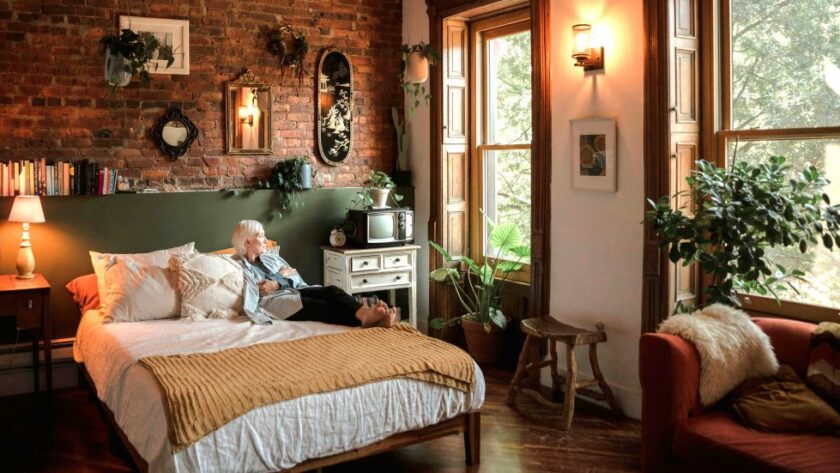
Hygge is the epitome of tangible comfort. We all need comfort to some degree or another at various times throughout each day/week/month/year, and throughout our lives. Winter especially is a time when we gravitate inward and want to create a cosy space for ourselves that facilitates rest and gentle relaxation. To embody this purpose is hygge, the Scandinavian concept of comfort and cosiness.
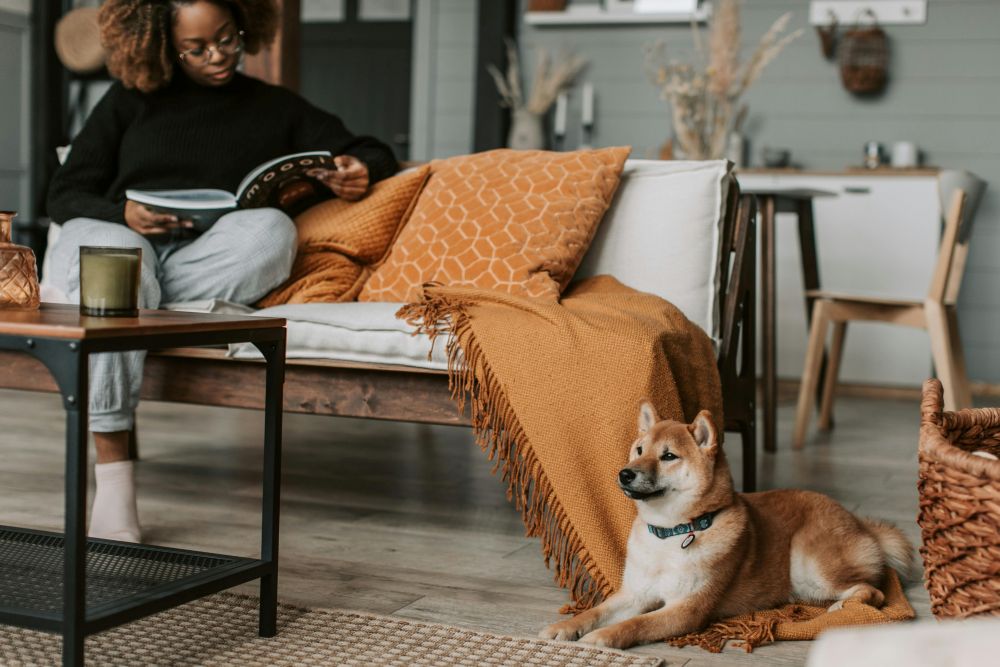
When we make a hygge home, we deliberately design our space with the goal of making it as comfortably welcoming as possible. We want simply being in our home to feel like a warm soft hug. To do so, we cultivate an environment that invites lounging and palpable interaction that engages all of our senses. It helps to avoid sharp edges and hard surfaces like metal and glass and to instead embrace soft natural textures, round edges and gentle warm-toned colours. Think plants, candles, fireplace, woven rugs, blankets, and pillows. Soup with freshly baked bread, books, tea and pleasant music or other ambient sounds. If this type of atmosphere appeals to you, lets explore how we can engage all of the senses to create the perfect hygge home in your space.
Disclosure: This post contains some affiliate links, which means I may receive commission if you click through the link and make a qualifying purchase (this does not affect the price in any way).
1. A Hygge Sight: Muted Colours, Natural Shapes, and Gentle Lighting
The primary sense most people use in relating to any environment is sight. If you have the sense of sight, you first and foremost take in the world with your eyes. What we see delivers an immediate first impression. How a room or space looks will give us an instant snapshot: do we like it or are we turned off? Is it invigorating and refreshing or is it kind of stale and dingy? Are the colours loud or are they muted? What sort of mood does the whole look embody?
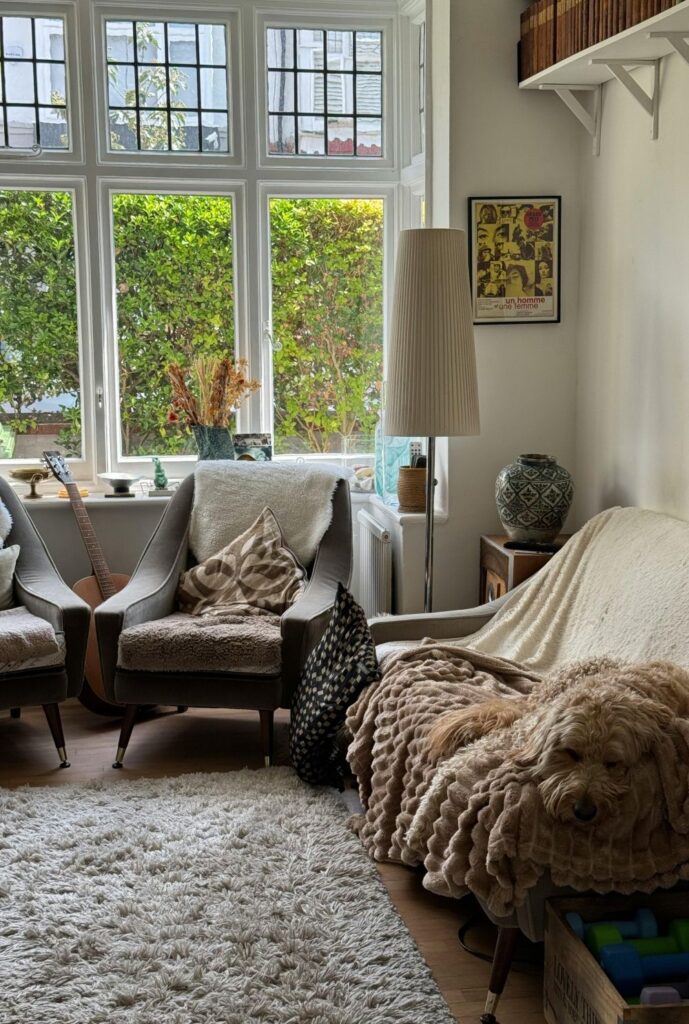
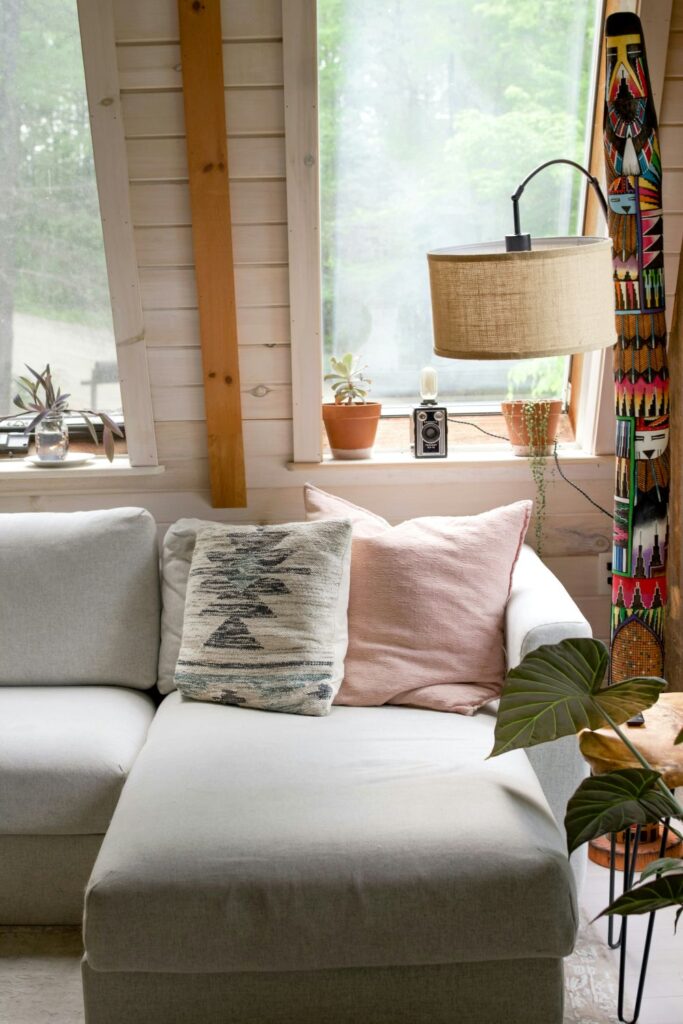
Hygge’s mood is that of ultimate relaxation. It is a feminine energy (embraced by men, women, and everyone alike – just as we all embrace masculine energy to some degree, too) that facilitates slowing down and relaxing, particularly in colder seasons when the weather outside isn’t as accommodating. So we want the look of our indoor space to feel like a warm embrace.
Colour
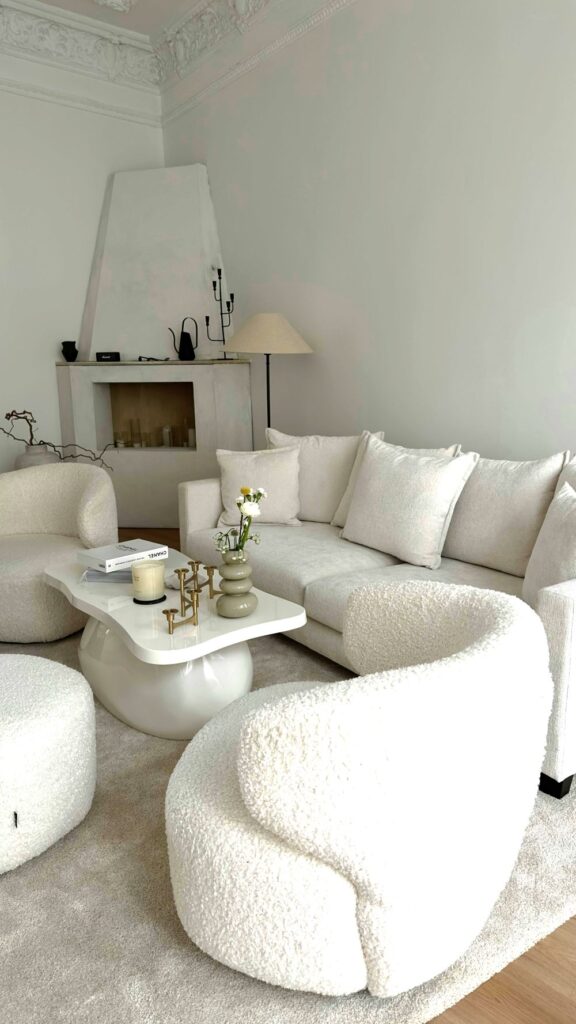
Let’s first focus on colour. It helps to initially rule out what would not contribute to a hygge palate. Neon colours, however fun and exciting, are the opposite of hygge. For a hygge home, think natural earth tones and neutrals like beige, brown, cream and sage. The materials inside your home will play a large role in this, like wood and naturally-dyed woven fabrics of soft jute rugs and throws. Of course, wall colours are a more permanent change so if you aren’t looking to repaint an entire indoor area then hanging tapestries is a good option for covering large swaths of an otherwise ‘less-than-hygge’ wall colour. Wool tapestries are pricier but truer to the natural fibers that resonate with a hygge home. Synthetic fabric tapestries aren’t as lovely a texture but can still provide a great visual upgrade if you find a hygge-friendly patterns or colours.
Macrame wall hangings are a lovely and affordable way to cover large areas of wall space. They are soft and woven and create a relaxed and natural look. Here are a few examples that would beautifully enhance a hygge home:
- Large 43-inch by 32-inch beige fringe macrame wall hanging
- Large 57-inch by 35-inch ‘dip-dye’ macrame wall hanging
- Large 39-inch by 29.5-inch macrame wall hanging
Shapes and Textures
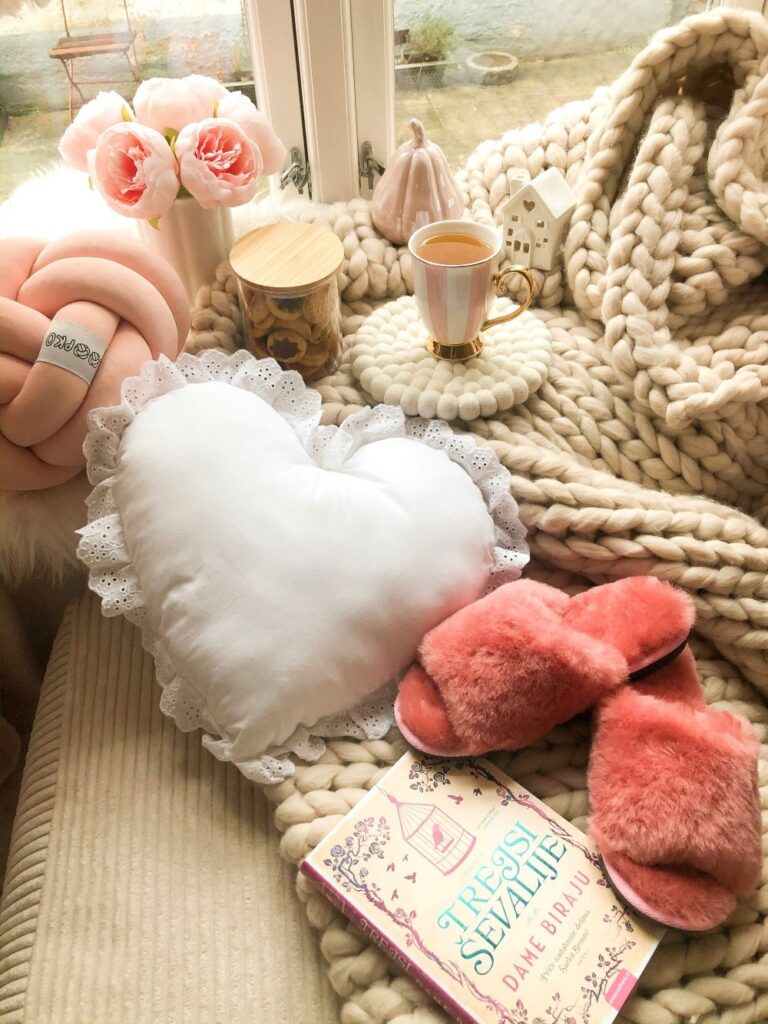
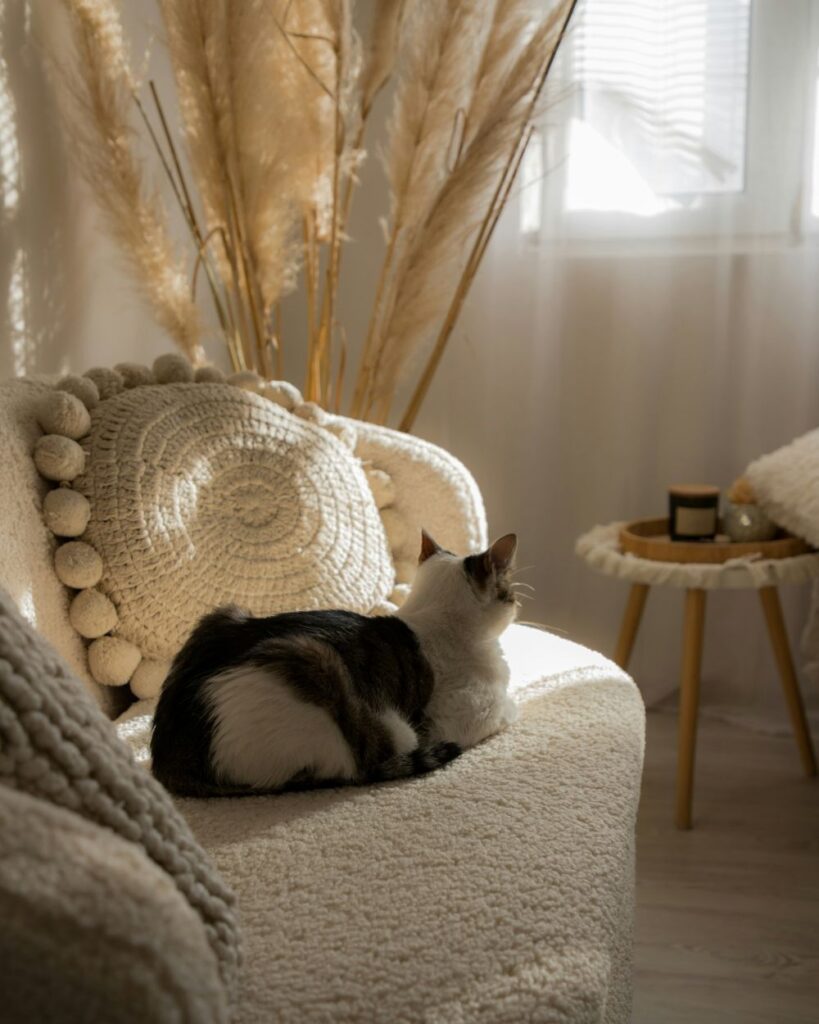
As for objects and furnishings in general, mimicking nature will create a more therapeutic and relaxing feel. With the exception of some monumental rock formations, most edges and shapes you see in nature will be rounded or patterned to some degree. You wouldn’t see an impeccably flat surface. Sand is made of trillions of tiny specks that move and slope, trees grow textured bark and follow the sun’s azimuth, and plants twist and blossom in various shapes. Likewise, it’s good to embrace furnishings with rounder edges and softer shapes instead of neat geometric patterns or hard edges. Furniture is often built in a rectangular form due to its simplicity and ease of construction, but when it comes to other objects that aren’t large or permanent fixtures that can be easily swapped out, opt for shapes with natural/uneven edges instead of straight and smooth lines.
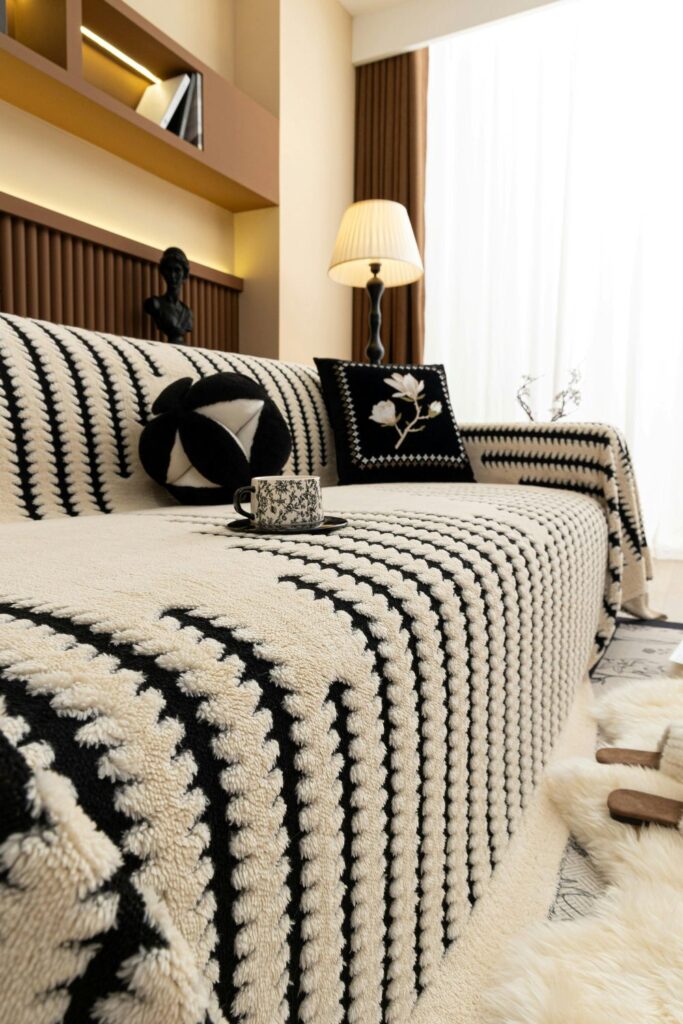
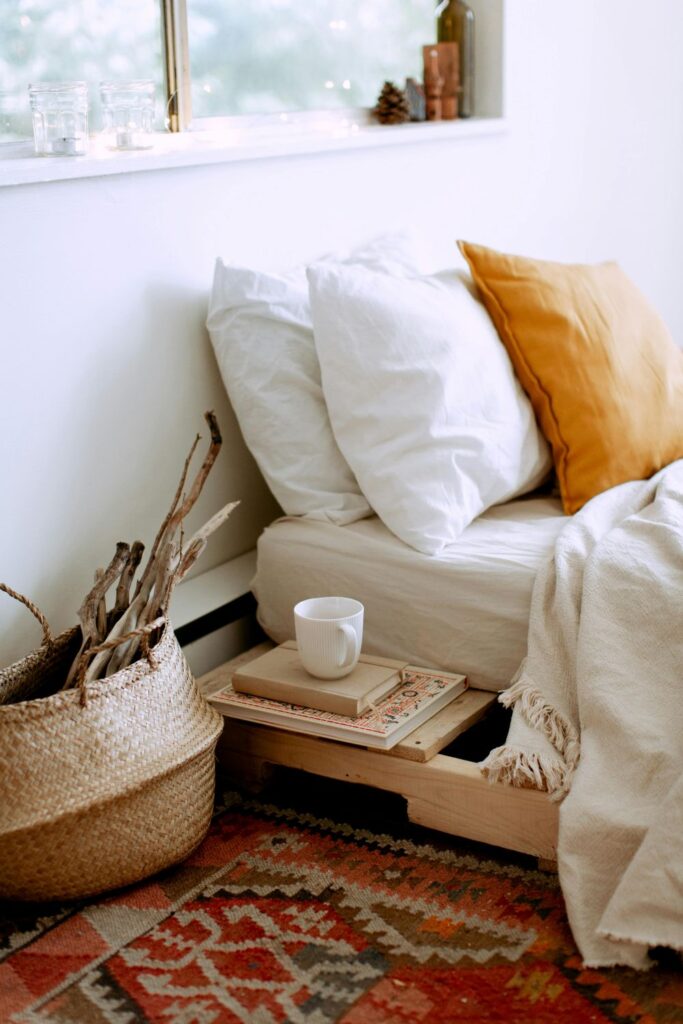
The best way to create natural texture is to simply bring things in from outside. Find pinecones, evergreen branches, and other such clippings to display on your mantel, tabletops, or hung from light fixtures and above doorways. Find large sticks or tree limbs to display in a large urn or vase (or umbrella stand). Collect stones outside that you find particularly interesting or pretty. Display them as is or piled in a bowl. Be creative with this and play it up to what you most like!
Light
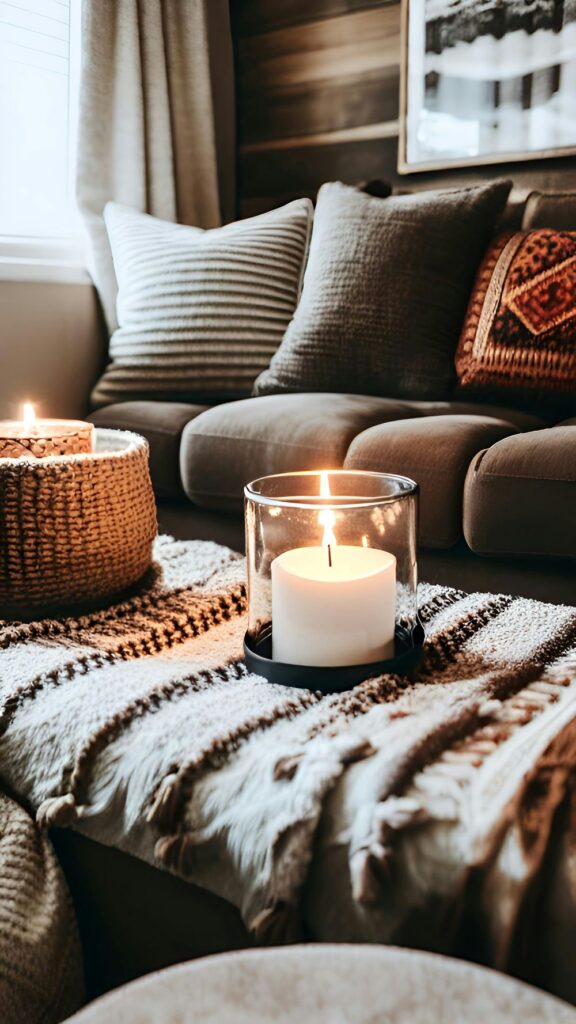

Finally, lighting plays a huge role in a hygge look. In fact, soft lighting is one of the pillars of a hygge home. You don’t want your indoor lighting to be too harsh or bright. Natural sunlight, of course, resonates with the natural world, but leave all fluorescent or overhead lights turned off. Switch on lamps with warm lightbulbs that cast a gentle glow over corners and other shadowy spots. Welcome the glow of fire from a lit fireplace and candles (or, if you have concern for fire safety, electric candles). String twinkly lights across your ceiling and walls or weave them through light fixtures and among other furnishings for a playfully inviting glow. Place salt lamps on shelves or in nooks. You’ll find that lighting can especially transform your space!

2. A Hygge Feel: Textures and ‘Interactive Living’
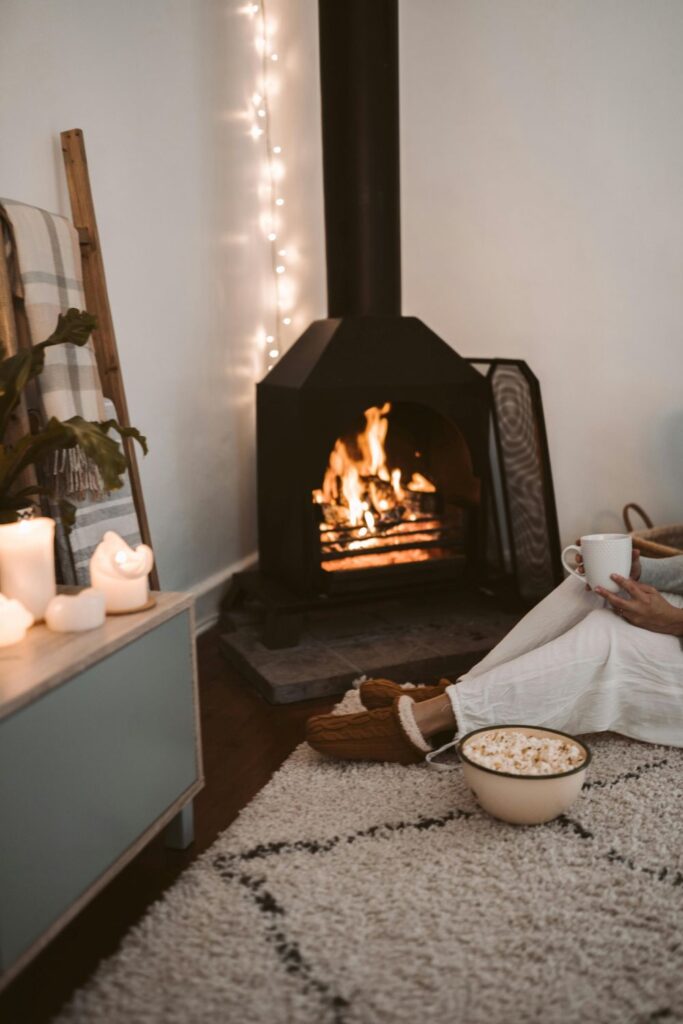
Second to sight, touch is the next dominant sense when it comes to creating an environment. How interactive is the space? Assuming no one is just going to stand around and not touch anything (we aren’t in a DMV, after all), what would one experience when they touch the surfaces around them, loll on the floor, or spread across the furniture?
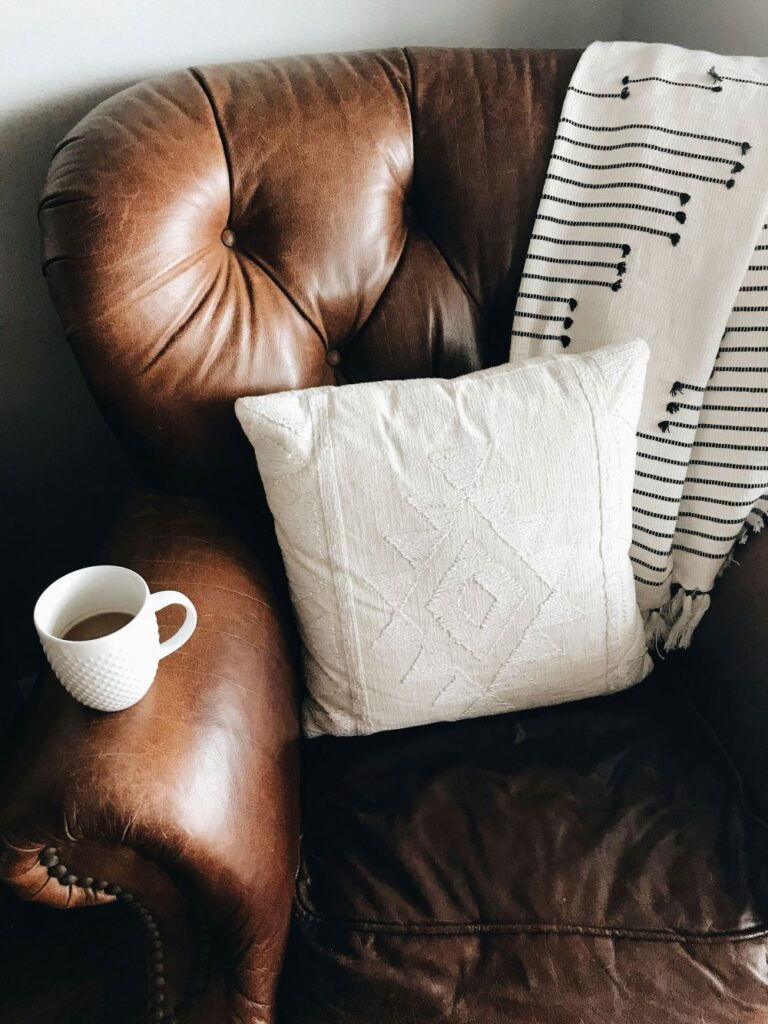

For a comparison study, consider an environment that feels the opposite of hygge: a huge open brewery with stainless steel counters and barstools, concrete floor, and exposed piping in the ceiling high above. The air feels chilly, all materials are metal or concrete, and echoes ring prominently throughout the space. This is the opposite of a hygge environment because nothing is soft to touch, there is nothing comfortable to sit or lean on, you have to shout to be heard, and materials are hard and sterile. On the other hand, a hygge home would feature soft or woven rugs, upholstered and comfortable furniture to sit or lounge on, and furnishings like blankets and cushions.
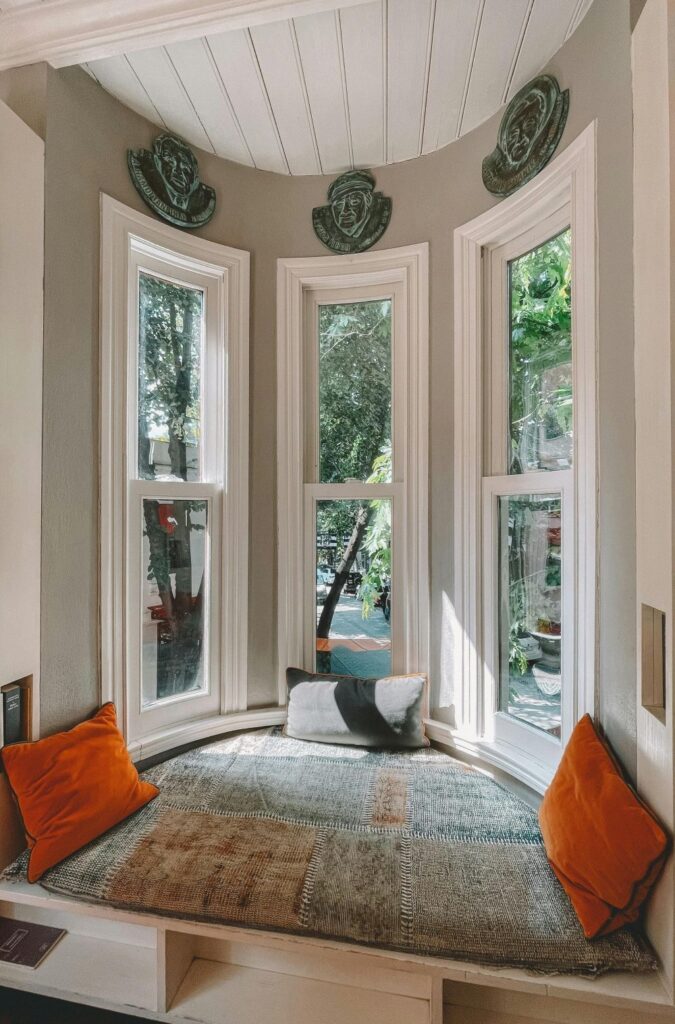

You want people to comfortably interact with your environment. Soft, warm textures invite interaction. Blankets and cushions invite cosy cuddles (whether with the materials themselves or with others, too). The idea is to relax. Our opposite example, the brewery environment, dissuades relaxation (perhaps coaxing customers to drink more beer in order to be able to relax) due to its non-interactive physical environment. In a hygge home, you are inviting interaction with the physical space around you. Soft knotted cushions are the epitome of hygge snuggliness. These knotted cushions from Sweden are unique, versatile, extremely cosy, and authentically Scandinavian hygge. Moroccan kilim floor cushions are also lovely for floor seating and are almost always in attractive earth tones.
Clothing


In addition to your home environment, let’s not forget wardrobe. After all, your apparel is the most intimate texture experience you have in any given day (unless you are a nudist – then this point is moot). While clothing isn’t necessarily a part of your home environment, it’s a part of you, and you need to be comfortable in your own outfit first and foremost! A hygge wardrobe wouldn’t include tight bandage dresses or stiff suits. Rather, it would look more like your hippie friends in winter-mode. Or simply Scandinavian warmth and simplicity (think woven cream-coloured knit socks and sweaters). This is entirely subjective to everyone, but the main idea is that you want to be comfortable in your clothing so just make sure you feel good in whatever fabrics and materials you don! Regardless of how something looks, you want it to feel soft, non-restrictive, and agreeable to your skin.



If you don’t already own anything super comfy and warm, it’s easy enough to pop by a thrift store and find some worn but perfectly comfy clothes. But if you want something new that will last a good while and is just your size, here are a few cosy options:
- Extremely warm and comfy fleece-lined jogger pants (I now own two pairs of these and can attest they are the warmest pants I’ve ever worn; perfect for cold winter months)
- Basic men’s sweater with henley zipper (my spouse loves this sweater and wears it all the time)
- Comfy knit sweaters from Australia’s Studio Sonnet (which, at the time of this writing, ships free to the USA)


3. The Smell of a Hygge Home: The Allure of Delightful Aromas
Never underestimate the power of scent. Smell is often the last sense people think of when crafting an environment; however, it is arguably the most powerful in terms of creating an impression. Think about it: if you walk into a room and smell something disgusting, you aren’t going to want to linger unless absolutely necessary, right? Likewise, if you enter a space that smells just amazing, you won’t be in a hurry to leave anytime soon.
Think about which scents bring you the most comfort. This is variable for everyone, of course, but some popular comfort scents include tasty flavours like vanilla and cinnamon, butterscotch (this one smells amazing) and bourbon, caramel and coffee, and other such good-enough-to-eat delights. If ‘edible’ smells aren’t your thing, maybe you embrace fresh, earthy scents like sage, petrichor, sandalwood, tobacco, or floral varieties. Whichever scent brings you the most comfort and enjoyment can be your hygge home fragrance.

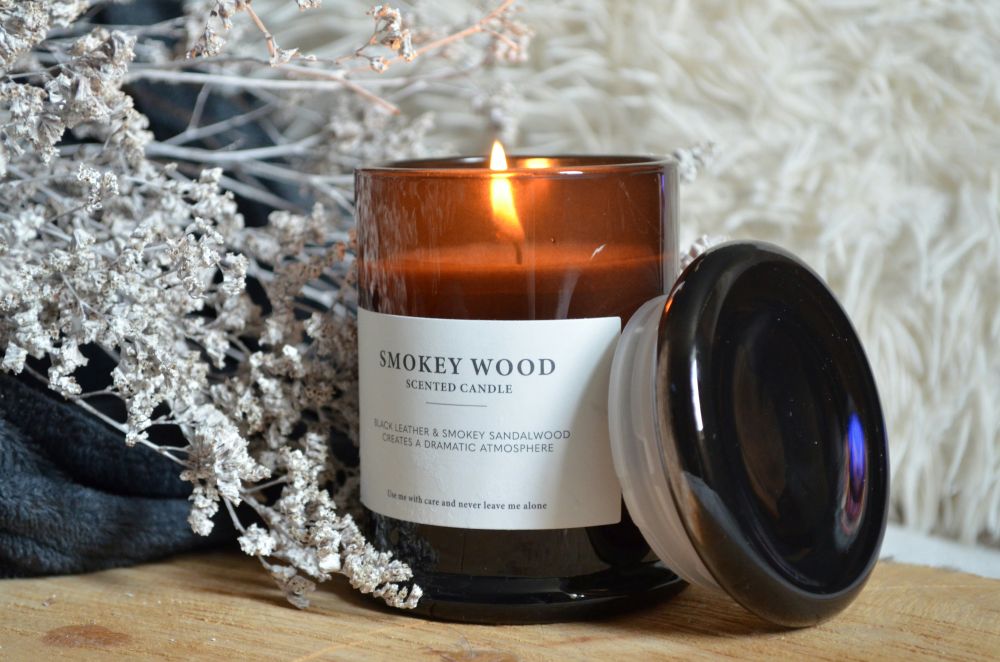
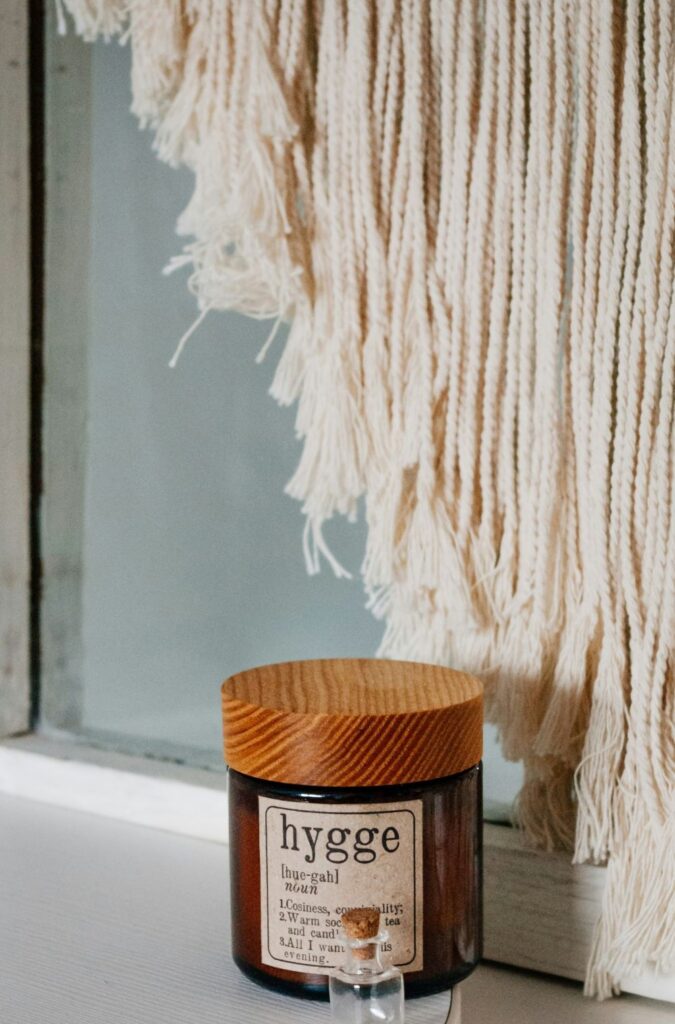
The easiest way to create an enveloping scent in your home is by burning scented candles, but you could also melt wax on a wax burner, simmer a pot of potpourri on a stovetop or hotplate, burn incense, set out freshly-cut flowers, or bake aromatic bread or pastries. An essential oil diffuser is another great alternative (though you won’t likely find essential oils that smell like sweet treats, of course). Essential oils like bergamot, lavender, peppermint, and others not only smell good but also have therapeutic properties that can calm or lift moods.
4. A Hygge Soundtrack: Relaxing Background Noise and Music
While smell is typically underestimated, hearing is probably second to sight when it comes to first impressions in a space. What you hear will also tell you plenty of information about an environment. Are the sounds inviting or are they repulsive? Is the noise agreeable or is it overstimulating? Do things sound happy or do they sound tense? Is the volume low enough for you to feel safe and relaxed, or is it so high it stresses you out? Is the music jarring or too loud, or is it pleasant enough for your comfort level?
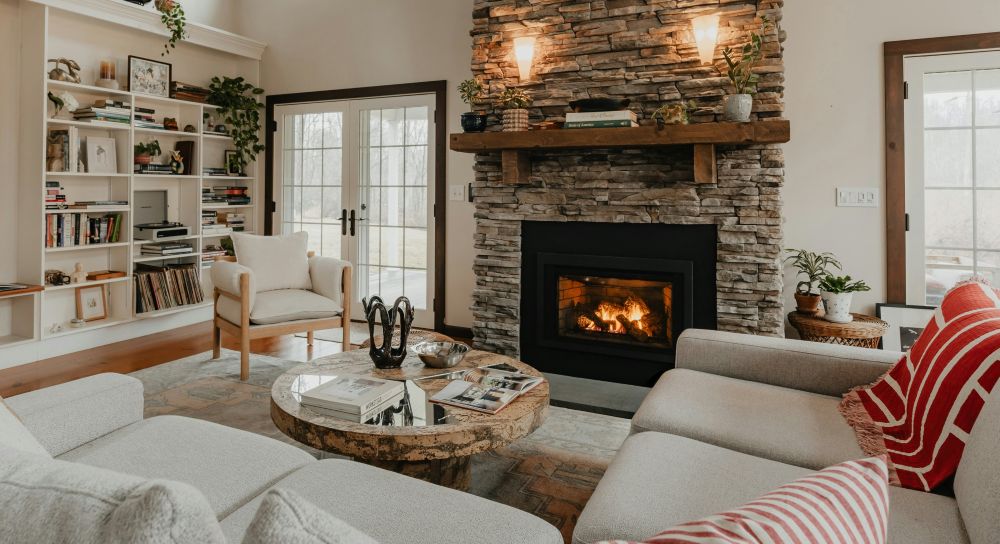
There are certain sounds that are universally comforting to people: the crackle of a fireplace (or even woodwick candles), ambient sounds of nature like rain or birds chirping, or any number of gentle ‘background’ noises like a quiet hum of a café, book pages turning, soft footsteps, steady slow-paced traffic going by, a jostling train, and so on. As for music, what makes any style comforting varies from person to person but may include popular sounds like a gently lilting jazz piano, a soft Spanish guitar, Celtic harp or slow drumbeats, or a slower-paced ambient trance track. As with scents, audio preference is variable to each person so your hygge sound depends entirely on what music or sounds bring you the most comfort. Some people like singing; others find vocals (along with saxophones or other instruments similar to human vocals) to be too stimulating and opt instead for instrumental music.

Soundscapes
If you enjoy certain sounds that you find relaxing, there are also many soundscape videos on YouTube that incorporate comforting audio elements customized to any environment imaginable – just search ‘ ambient soundscape’ and you’ll be pleasantly surprised at what may pop up in the search results. Below are a few that I’ve found especially comforting and which I’ll sometimes play to drown out other distractions (i.e. loud phone calls upstairs or the unfortunate suburban American soundtrack of neighbours’ everyday rampant and erratic leaf-blowing outside) whilst trying to work:
- Books and tea in the rabbit hole (cozy forest ambience and quiet music)
- Coffee shop ambience (I played this one at work to drown out distracting background noises)
- Cozy rainy evening in bedroom
- Rainy jazz café (includes relaxing music)
- Any atmospheric soundscape videos from creator Autumn Cozy (many seasonal options)
5. The Taste of Hygge: The Art of Comfort Eating


Last but certainly not least, the other less-prioritized sense: taste. Now, when I talk about ‘comfort eating’ I don’t mean the concept of eating one’s emotions in the sense of mindless, unhealthy eating. I mean eating foods that bring you absolute joy and comfort, whilst enjoying and savoring every bite in the moment. This is not the same thing as eating so-called ‘comfort foods’ in order to not feel whatever uncomfortable emotions arise. I mean eating delicious foods specifically in order to enjoy them, perhaps as a way to celebrate life and yourself and those you hold dear.
I’m one of those people who has to always know ‘the food plans.’ If I’m out and about, I need to know when, where, and how I will get my next meal. I have never been without food in my life (perhaps this is a starvation fixation from a past life?) but somehow I’ve always had ‘starvation anxiety’ and have to have the comfort of knowing I’ll get something delicious soon. Nothing worse than being with a group of people and subject to somebody else’s deranged idea of a food schedule or gross meal plan without snacks!

While always having tasty things on hand is a personal value of mine, I bring this up because it’s also important for a hygge home. Everybody knows that food is what binds all social fabric. We need it to survive, and it’s tasty for a reason: life is meant to be savored and enjoyed. People bond over eating. We enjoy life that much more when we eat good food. The things we need for survival are meant not only to keep us from dying but also to nourish our bodies and minds, which are one and the same anyhow.
The ’Hygge Diet’
A ‘hygge diet’ is one that nourishes, delights, and brings people together. Whether you are enjoying your hygge home solo or whether you are with your family or lovely friends, have delicious and filling snacks (or a meal) on hand. And this includes bevvies! Typical hygge drinks include tea, coffee (including water-or-CO2-decaffeinated options for later in the day), hot toddies, mulled wine, cider, hot cocoa, and other such comfort-in-a-mugs.



Rich, creamy soups paired with fresh bread are an excellent and nourishing meal. This blended vegetable soup is my all-time favourite recipe. While it’s very filling and satisfying, it is 100% healthy so you know you are nourishing your body beautifully. If you don’t have the patience or stamina to churn the cooked veggies through a food mill, I used a food processor last time (once I let it cool since I don’t want hot food in plastic) that did the job in a fraction of the time and with far less physical effort.
If you want more recipes, read this post on how to have a hygge party where you’ll find recipes for comfort food and bevvies (such as cheese fondue and various hot toddies) listed in the second section of the article. In the fourth section you’ll also find several ‘hygge’-scented candles, among other ideas listed throughout.

The Hygge Home Experience
While hygge is originally a Danish concept that’s primarily relevant in colder climates, it is also a concept you can embrace year-round in any context you choose. Highly sensitive people or neurodivergent people, for example, may already naturally incorporate hygge concepts into their lifestyle in general simply because they’ve learnt that that’s what their unique bodies and minds need in order to feel safe and comfortable enough to relax, create, connect and flourish. Some people stumble upon the concept of hygge and realise, ‘huh; that’s something I’ve always gravitated toward anyhow.’

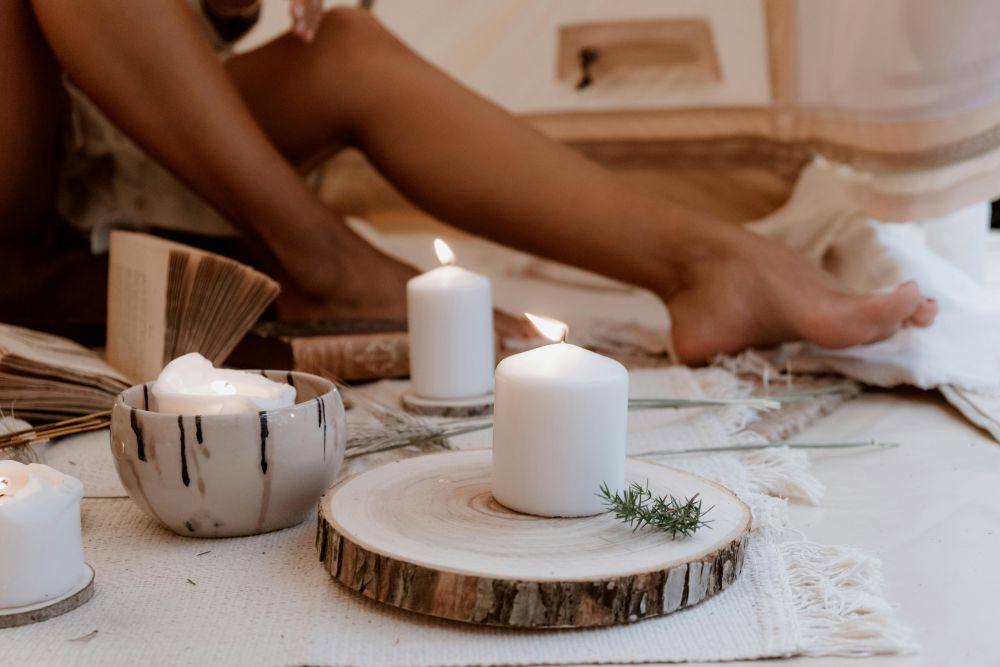
Whatever your life looks like and however permanently or infrequently you need hygge in your home, there are always things you can do to create that environment and adapt it to whatever climate, space, or lifestyle. I hope you’ve found some helpful ideas here that you can use to customize the perfect hygge home for you and yours!


Many cheers.